What Changes on the Floor When the System Actually Keeps Up
It doesn’t feel like a transformation. The racks are the same. The layout is familiar. The faces are mostly the same. But something shifts — and if you know what to look for, you can see it in the first week.
People hesitate less. Work flows more cleanly. Fewer questions get asked. This is what happens when the system keeps up with the floor instead of the floor working around the system.
It Doesn’t Look Like What You’d Expect
If you’ve spent time reading about warehouse automation, you’ve probably seen the before-and-after framing. The dramatic numbers. The transformation story. The operation that was struggling, installed a system, and now runs like a Swiss watch.
Real life doesn’t look like that.
When a system that actually keeps up is deployed on a floor that was already running, the change is quieter. There’s no ribbon-cutting. No week where everything is different. The racks are still the same height. The forklifts are still in the same aisles. The shift schedule doesn’t change.
What changes is the rhythm. The pace of work becomes steadier — not necessarily faster, but more even. The spikes of confusion that used to interrupt a shift — the five minutes spent looking for something that was moved, the ten minutes spent resolving a discrepancy between the screen and the shelf — those spikes flatten out. They don’t disappear all at once. They just stop recurring.
A visitor walking the floor for the first time wouldn’t notice anything remarkable. But someone who worked there last month would feel the difference immediately. It’s the kind of change that shows up in how people move rather than in what people say.
If you’ve read about why fixed systems struggle in a moving operation, this is the outcome of solving that problem. Not a revolution — a recalibration.
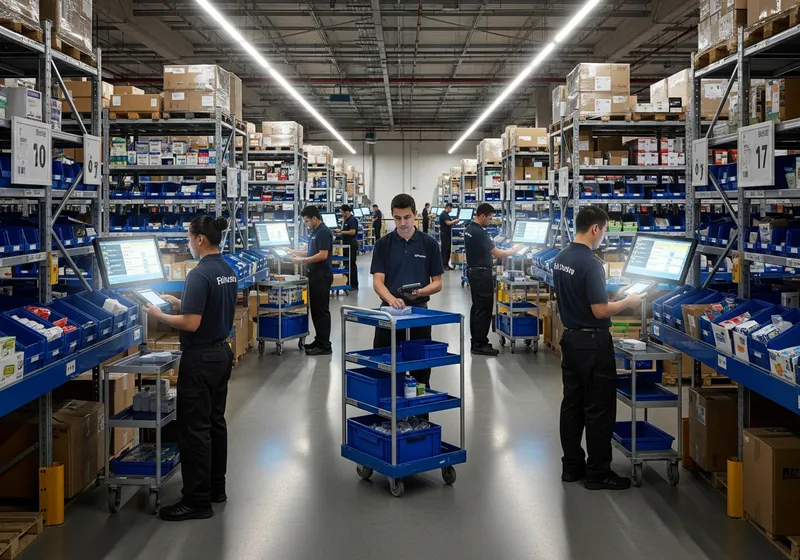
The Hesitation Goes Away
There is a pause that happens in almost every warehouse, dozens of times per shift, that nobody talks about. It’s the moment a picker arrives at a location and hesitates.
Sometimes it’s because the bin looks different from what they expected. Sometimes it’s because the quantity feels wrong. Sometimes it’s because they’re not sure they’re in the right place and they’re about to double-check on a handheld. Sometimes they glance at the shelf label, glance at the screen, glance back at the shelf, and then commit.
These pauses are individually tiny — two seconds, five seconds, sometimes less. But they accumulate. Across a team of 20 pickers over a full shift, hesitation can consume hours of labor. Not because anyone is slow. Because the system creates just enough uncertainty that checking feels necessary.
When the system keeps up — when the wireless pick-to-light device at the location is already lit, already showing the right product, the right quantity, and an arrow pointing to the right slot — the picker doesn’t pause. They arrive, they pick, they confirm, they move. The hesitation simply isn’t triggered because the information is already there, in the right place, before they have to look for it.
This is almost impossible to measure with a stopwatch. But supervisors who have seen it happen will tell you: the floor sounds different. There’s a flow to it. People are moving with purpose rather than moving with caution. The difference between the two is the difference between a team that trusts the system and a team that’s constantly verifying it.
The Biggest Change Isn’t Speed — It’s Confidence
When people evaluate automation, they almost always lead with speed. How many picks per hour. How fast the system responds. How much throughput increases.
Speed matters. But it’s not the change that transforms an operation. Confidence is.
When a picker is confident — genuinely confident that the information in front of them is correct — they don’t double-check. They don’t pause. They don’t walk back to a previous location because they’re not sure they picked the right thing. They move with certainty, and certainty is faster than speed alone.
This is a subtle but critical distinction. A system that makes people faster but not more confident just accelerates the existing error rate. People rush through the same ambiguous information, and errors increase proportionally. A system that makes people confident has the opposite effect: they move at a natural pace, but that natural pace is substantially faster than a cautious one — and the error rate drops because the information was right.
Confidence also changes behavior in ways that are hard to quantify but easy to observe. A confident picker doesn’t interrupt their supervisor to ask about a discrepancy. A confident lead doesn’t spend the first hour of a shift reconciling what the system says with what the floor looks like. A confident operations manager doesn’t pad their labor plan with an extra two heads “just in case.”
Every one of those behaviors was rational before — a reasonable response to a system that was sometimes wrong. When the system is consistently right, those behaviors aren’t just unnecessary. They become visibly wasteful. And the team adjusts, not because someone told them to, but because the reason for the old behavior is gone.
What Supervisors Stop Doing
Ask a warehouse supervisor how they spend their day, and the answer will include a surprising amount of reactive work. Answering questions about where things are. Resolving conflicts between what the WMS says and what the shelf shows. Walking new hires through exceptions they haven’t seen before. Re-explaining the same unofficial workarounds to the same temp workers every Monday.
These aren’t optional tasks. When the system isn’t doing the guiding, the supervisor becomes the system. They are the interface between what the operation should be doing and what the technology says it should be doing. And every hour they spend in that role is an hour they’re not spending on improvement, planning, or managing the work that actually requires judgment.
When the system keeps up, the questions stop. Not all of them — supervisors will always have a role in exception handling and decision-making. But the repetitive, information-gap questions — “Where did we put the overflow for SKU 4471?” “Which slot is the new product in?” “Is aisle 6 still set up from yesterday?” — those disappear, because the answer is already visible on the device at the location.
What supervisors get back isn’t just time. It’s attention. The ability to watch the flow of work instead of being embedded in it. To notice that zone 3 is backing up before it becomes a problem. To have a five-minute conversation with a new picker about technique instead of spending that five minutes explaining which bin is which.
A supervisor who is answering questions all shift is managing the present. A supervisor who isn’t is free to manage the future. That shift in where their attention goes is one of the highest-leverage changes that happens when the system keeps up.
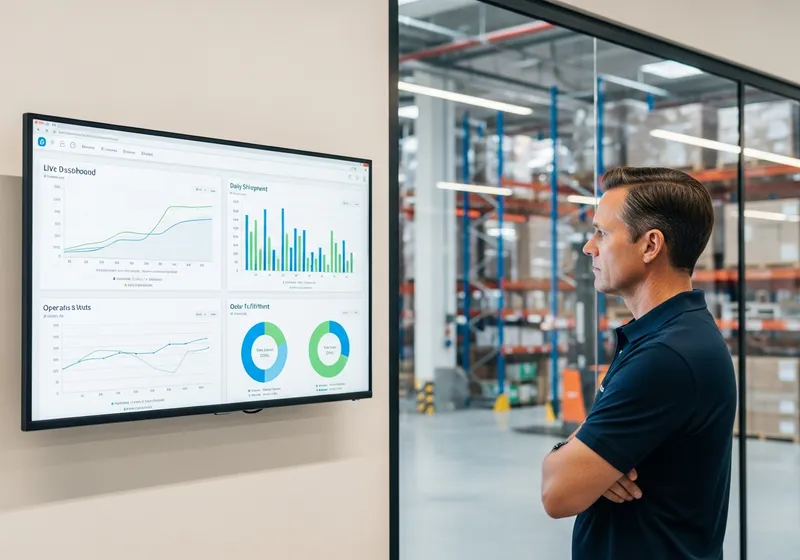
New Hires Disappear Into the Team
In most warehouses, you can spot a new hire from across the floor. They move slower. They look at their handheld more often. They stop at intersections. They ask the person next to them for help. There’s a visible gap between them and the rest of the team, and that gap takes days or weeks to close.
The gap exists because the new hire is learning two things simultaneously: the job and the warehouse. The job — pick this item, confirm the pick, move to the next — is simple. The warehouse — where things are, which sections have been rearranged, which locations are unofficial, which exceptions require which workaround — is not. And in most operations, the warehouse knowledge takes far longer to acquire than the job knowledge.
When the system carries the warehouse knowledge instead of the person, the equation changes. The new hire doesn’t need to memorize the layout. They don’t need to learn the unofficial locations. They don’t need to build a mental model of which zones were rearranged last week. The device at each location tells them what they need to know: what to pick, how many, and which direction.
The result is that a new hire starts contributing sooner — not at a veteran’s pace on day one, but at a pace that’s useful by the end of the first shift. By the end of the first week, they’re indistinguishable. They’ve disappeared into the team.
For operations that rely on seasonal labor, high-turnover workforces, or temp agencies, this is transformative. The cost of a new hire isn’t the hourly rate — it’s the weeks of below-average productivity while they learn the building. When the system compresses that curve from weeks to days, the math on labor flexibility changes dramatically.
It also changes the emotional texture of the floor. When new people can contribute immediately, they feel competent. They’re less anxious, less likely to make confidence-driven errors, less likely to avoid asking for help because they’re embarrassed about asking again. That psychological safety has a direct impact on retention — people stay longer when they feel capable from the start.
The Questions Change
This one is easy to miss, but it might be the most meaningful signal that the system is working.
In an operation where the system doesn’t keep up, the questions that get asked are low-level. “Where is this?” “Is this right?” “Did someone move the product in C-12?” “What’s the actual quantity in this bin?” These are information-retrieval questions. They exist because the system failed to provide the information at the point of work.
When the system provides that information reliably, those questions vanish. And something interesting takes their place: higher-order questions.
“Why do we pick these two products from opposite ends of the building when they’re always on the same order?” “What if we moved the top 20 SKUs closer to the pack stations?” “Would it make sense to batch these orders differently on Tuesdays when we have fewer pickers?”
These are optimization questions — and they come from people who finally have enough headspace to think about the work instead of just doing it. When a picker isn’t spending mental energy verifying locations, they start noticing patterns. When a supervisor isn’t fielding “where is it?” questions, they start seeing flow problems. When the operations manager isn’t reconciling data gaps, they start asking strategic questions about layout and sequencing.
This is what happens when the system stops consuming the team’s cognitive bandwidth and starts freeing it. The intelligence that was always on the floor — that was always present in the people doing the work — finally has room to operate. And the suggestions that come from people who touch the product every day are almost always better than the ones that come from a conference room.
Where the Time Actually Comes Back
People ask about ROI in terms of pick rate improvements and error reduction. Those matter. But the time that comes back when the system keeps up is distributed across categories that don’t always show up on a standard metrics dashboard:
Pickers stop walking to the wrong location, backtracking, and re-reading their handheld. The device is already lit at the correct spot. This is the most immediately visible change and the easiest to quantify. It compounds across every pick, every shift, every zone.
The two-second pause at every pick — the glance-check-glance cycle — collapses to zero when the information at the point of work matches reality. Across thousands of picks per shift, those seconds become hours.
New hires reach productive speed in days instead of weeks. That means fewer buddy shifts, less supervisor shadowing, and faster time to full contribution during hiring surges.
When supervisors aren’t answering the same 15 questions every shift, they’re available for work that requires judgment: zone balancing, exception handling, process improvement.
Mispicks don’t just cost the time to ship the wrong item. They cost the return processing, the reshipping, the customer service call, and the inventory adjustment. Confidence-driven accuracy prevents all of that at the source.
When moving a product to a better slot doesn’t require a project, the operation starts self-optimizing. Those small layout improvements — the ones that were always deferred because the effort wasn’t justified — start happening. Each one saves a few seconds per pick, and they compound.
Individually, none of these categories would justify a system change. Together, they represent a fundamentally different operating posture — one where the team spends its time on productive work instead of compensating for information gaps.
The Quiet Accumulation
None of the changes described in this piece happen in a single dramatic moment. There’s no day when the operation flips from “before” to “after.” What happens instead is an accumulation — a slow, steady replacement of friction with flow.
The first week, the hesitation starts to recede. The second week, a new hire finishes their first shift without asking where anything is. The third week, a supervisor notices she hasn’t been pulled off her planning work all morning. The fourth week, a picker suggests reslotting two products — and somebody actually does it, in 20 minutes, without a ticket.
Each of these is small. But the accumulation isn’t. After a few months, the operation isn’t just running smoother. It’s running on a different trajectory. The team is improving the operation, not just enduring it. Problems are being solved at the point where they’re discovered, not escalated through layers of bureaucracy and forgotten.
That trajectory — the compounding of small, continuous improvements made possible by a system that absorbs change without penalty — is the thing that can’t be captured in a before-and-after metric. It shows up six months later, when the operation is measurably better and nobody can point to the single decision that caused it.
If you want to understand how teams adopt this without disrupting current production, it helps to look at how effective pilots are structured. See Automation That Doesn’t Interrupt Production.
And if you’re exploring how this works at a system level — how picks are guided, how devices communicate, how the flow of information moves from WMS to shelf — reviewing how execution is guided in real workflows is a practical next step. Voodoo Robotics wireless pick-to-light was built around exactly this dynamic — devices that deploy in hours, connect to your WMS through open-source integrations, and put the right information at the right location before the picker arrives.
See What a System That Keeps Up Looks Like
Voodoo Robotics wireless pick-to-light moves with your operation — no downtime, no IT tickets, no retraining when the floor changes.