Mispicks: What They Cost and How to Stop Them
A mispick is a picking error that gets past the picker: the wrong item, the wrong quantity, a skipped line, or the right item dropped in the wrong tote. Every one of them costs several times the value of the item, and the ones that reach a customer cost far more than that.
This guide covers what counts as a mispick, why they happen, how to measure the real rate and cost, and the fixes that work, from relabeling a shelf to lighting the pick location so there is nothing left to search for.
What Counts as a Mispick
Operations use "mispick," "mis-pick," and "picking error" for the same thing: the picker finished the line, and what ended up in the tote does not match the order. Five kinds show up in practice, and they are caught in different places, which is why most warehouses undercount them.
| Type | What happened | What the customer sees |
|---|---|---|
| Wrong item | A look-alike SKU, the neighbor location, or the right product in the wrong size or color | Customer receives something they did not order |
| Wrong quantity | Picked 3 instead of 4, or a case instead of an each | Short shipment or overshipment; inventory drifts in both directions |
| Skipped line | A line on the pick list never picked | Incomplete order, a second shipment, a second delivery charge |
| Wrong order or tote | Right item, right quantity, dropped into the neighboring order on a cart or put wall | Two customers get the wrong thing at once |
| Unrecorded substitution | Picker takes a 'close enough' item because the location was empty | Inventory record says the original was shipped |
The first two are the ones people picture. The last three are the ones that show up as "we shipped it, the customer says we didn't," an argument the warehouse usually loses.
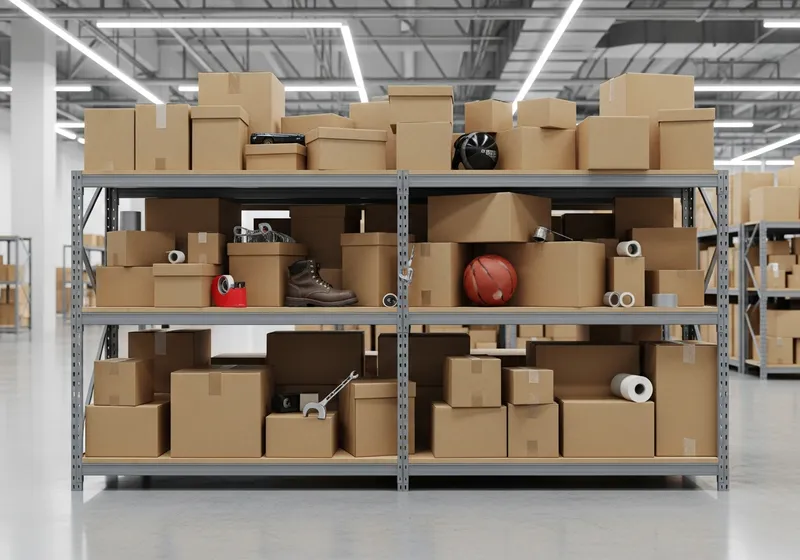
Why Mispicks Happen
Almost every mispick traces back to one of six causes. Notice that only one of them is "the picker was careless." The rest are the process asking a person to search, remember, or count without giving them anything to check against.
Look-alike SKUs in neighboring locations
Two part numbers that differ by one character, sitting next to each other because they were received together. The picker reads the first four digits and grabs the neighbor. This is the single most common cause and the cheapest to fix.
Search, not selection
With a paper list or a handheld screen, the picker is told a location and then has to find it. Every second of searching is a second of exposure to the wrong shelf, and the fix at the end of a long search is a guess.
Quantity read once, counted never
The list says 12, the picker remembers 10. Nothing at the location shows the number, and nothing asks for confirmation.
Batch picking without sortation control
One cart, six orders, and the only thing separating them is which tote the picker meant to drop into. Right item, wrong customer.
Replenishment errors
The location was stocked with the wrong product. The picker did exactly what the system said and still shipped the wrong item. Cycle counts find these late.
Fatigue, turnover and seasonal staff
Error rates climb at the end of a shift and during peak, when the pickers with the least training are doing the most lines.
How to Measure Your Mispick Rate
Use lines, not orders: mispick rate = picking errors ÷ order lines picked. An order-based rate hides the fact that a 40-line order has forty chances to go wrong, and it makes a small-order operation look better than it is.
Count errors at three points and keep them separate, because they tell you different things:
- Caught at pack. A pack-verification step or a scan at the pack station found it. This is your true picking error rate.
- Caught by the customer. Returns, credits and "where is the rest of my order" tickets. This is what your customers think your error rate is.
- Found by cycle count. Inventory that is short in one location and over in another is a mispick nobody noticed.
Paper and unverified handheld picking commonly runs around one error per 100 to 300 lines. Light-directed picking with a confirmation press at every location, or scan-verified picking, typically runs below one per 1,000. The numbers vary with SKU density and product mix, so measure your own baseline for a full month before you set a target, and measure per zone: the fast-moving each-pick zone and the pallet zone will not have the same rate.
What a Mispick Really Costs
The item is the smallest part of the bill. A mispick that reaches a customer sets off a chain of work in three departments, and every link has a cost:
| Cost component | Where it lands |
|---|---|
| Return shipping for the wrong item | Carrier cost, often paid twice |
| Re-pick and re-ship the right item | Labor plus a second carrier charge, frequently expedited |
| Customer-service time | Ticket, RMA, credit memo, follow-up |
| Receiving and restocking the return | Inspect, relabel, put away, or write off |
| Inventory correction | The record was wrong in two locations until someone noticed |
| Retail compliance chargebacks | Big-box and marketplace customers fine short or wrong shipments |
| Lost reorders | The cost you never see on an invoice |
An illustration, with the assumptions stated so you can swap in your own numbers. A warehouse picking 2,000 lines a day at one error per 200 lines makes 10 mispicks a day. If a third are caught at pack (a few minutes of re-pick each) and two-thirds reach customers at a fully loaded cost of $50 to $100 each in freight, labor and handling, the operation is spending somewhere between $350 and $700 a day on errors, before counting a single lost customer. Over a year that is $90,000 to $175,000, which is why an error-reduction project pays for itself faster than a throughput project of the same size.
The pick-to-light cost and ROI calculator runs this arithmetic with your line volume, error rate and labor cost, and shows the payback on lighting the zone where the errors happen.
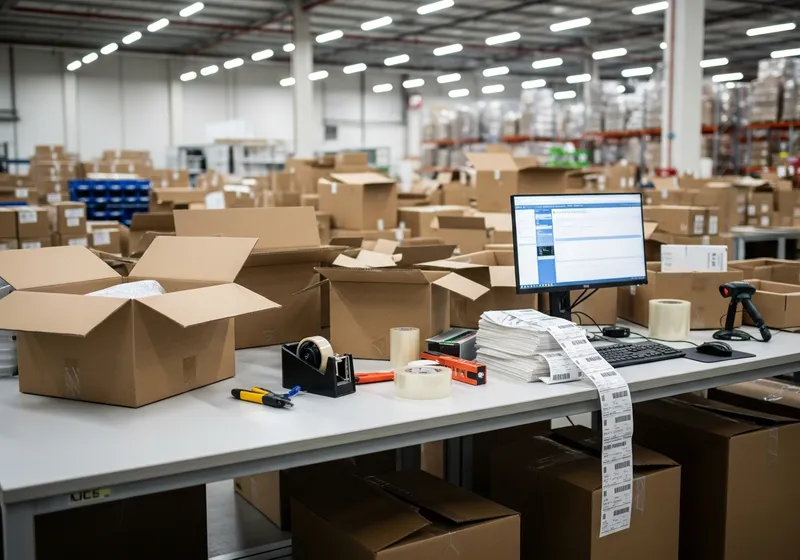
How to Reduce Mispicks, Cheapest Fix First
Work down this list in order. The first three cost almost nothing and typically remove a third to a half of the errors. The fourth removes most of the rest, because it takes the search and the counting out of the picker's hands.
1. Fix the labels and the SKUs
Large, high-contrast location labels; product labels that show the differentiating characters first; no two look-alike SKUs in adjacent locations. Free, and it removes the most common error on its own. How to create good SKUs.
2. Slot for accuracy, not just travel
Put the fast movers where they are easiest to identify, separate sizes and colors of the same product by at least one location, and keep case and each quantities of the same SKU apart.
3. Verify at pack
A scan or a light-directed check at the pack station catches the wrong item before it ships. It does not prevent the error, but it turns a customer complaint into a two-minute re-pick. Pack-to-light verification.
4. Show the location instead of describing it
This is the step that removes the cause rather than catching the result. A light at the location, the quantity on the display and a button to confirm mean the picker never searches, never remembers a number and never skips a line without the system knowing. Wireless pick-to-light.
5. Control the sort in batch picking
If one cart carries several orders, light the tote position too. On a put wall, light the cubby. Right item, right order, every time. Put wall systems.
6. Scan where lights don't fit
Bulk and pallet locations that see one pick a day do not need a display; a barcode scan at those locations confirms the item. Mixed operations run both. Barcode scanners with pick-to-light.
What Pick-to-Light Changes
Look back at the six causes. Four of them are the same problem in different clothes: the process tells the picker something and then trusts them to find it, read it, count it and remember it. A pick-to-light system replaces the telling with showing (how pick-to-light works, end to end).
- The location lights. There is nothing to search for and nothing to misread; the neighbor location is dark.
- The quantity is on the display at the moment of the pick, not on a list the picker read thirty seconds ago.
- The picker presses to confirm. A skipped line stays lit. The system knows what was picked, and the pack station can verify it.
- Each picker has a color, so several people can work the same aisle without taking each other's picks.
- Batch picks stay separated. Put the same displays on the cart's tote positions or on a put wall's cubbies and the "right item, wrong order" error goes away too.
Wireless, battery-powered displays like Voodoo's Cloud Display Devices mount with magnets, so you can light the one zone that produces most of your errors in an afternoon and leave the pallet racks alone. The $5,000 starter kit includes ten displays and a router, enough to light one zone and measure the difference on your own floor before you commit to more.
What lights do not fix: a replenishment error puts the wrong product in a lit location, and a picker who ignores the display can still grab the neighbor. That is why steps one, two and three on the list above come first, and why the pack-station check stays even after the lights go in.
Frequently Asked Questions
What is a mispick?
What is a good mispick rate?
Does barcode scanning eliminate mispicks?
How quickly can a warehouse reduce mispicks?
Why do mispicks cost so much more than the item?
Light the Zone Where Your Mispicks Happen
Ten wireless displays, one router, one afternoon. Measure the error rate before and after, then decide.